
1. How Rising Energy Costs Shape Investor Psychology
From what I’ve seen over the years, inflation often sneaks up when oil prices rise. Rising fuel costs affect transportation, manufacturing, and consumer goods, and that pressure changes how investors think. During such phases, inflation hedges become important. While gold has long been a trusted hedge, Bitcoin is now viewed as a modern hedge by crypto-savvy investors. This shift in thinking can increase demand and push capital toward crypto, shaped by overall risk sentiment and larger economic forces, especially during periods of rising oil prices.
2. Expensive Oil and the Drain on Market Liquidity
When high oil prices make energy expensive, economic growth often slows. I’ve noticed countries and companies spend more on energy, leaving less for investments. As a result, liquidity—the money flowing through financial markets—drops. In these conditions, risky assets like Bitcoin tend to suffer, as investors grow more cautious and step away from volatile assets.
3. Why Big Money Rotates from Crypto to Energy Assets
Another pattern becomes clear when oil prices rise sharply. Institutional investors often reallocate capital, choosing oil-related stocks, energy ETFs, or commodities over Bitcoin. These are seen as safer bets in times of rising energy prices. This shift in demand can slow BTC momentum, even if nothing negative is happening inside the crypto ecosystem itself.
4. The Hidden Energy Cost Behind Bitcoin Mining
At the operational level, Bitcoin mining is deeply tied to energy. It requires a lot, and rising oil prices mean higher electricity and fuel costs, especially in regions where mining relies on fossil fuels. This increases mining expenses. When operations are less profitable, miners may slow or shut operations, which can reduce the pace of new BTC supply and alter market price dynamics.
5. Why Oil and Bitcoin Don’t Move in Sync
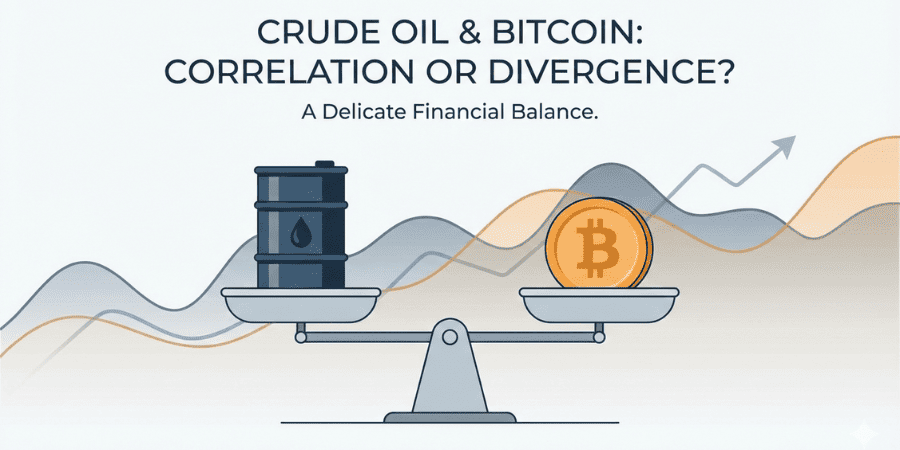
One key lesson experience teaches is that there is no fixed pattern. Oil and BTC are influenced by macroeconomic trends such as inflation, trade wars, and investor sentiment, but they do not always move together. Sometimes prices rise together, other times they move in opposite directions. The relationship always depends on the broader economic context.
6. China’s Slowdown and Its Ripple Effect on Oil and Crypto
Looking globally, China plays a major role. When its economy slows due to tariffs or trade disputes, oil demand can drop. Lower oil prices may reduce inflation, but they can also reflect weak global growth. This environment can hurt Bitcoin, as less growth reduces risk appetite and leads to tighter financial conditions.
7. Energy Supply Shocks and Pressure on Bitcoin Mining
Finally, tariffs, oil disruptions, and stress in the energy market can make fuel and electricity more expensive or unstable. This creates uncertainty for Bitcoin miners, especially in countries dependent on oil-based power. These changes in mining costs influence Bitcoin’s supply chain and overall market sentiment, showing how crude oil and Bitcoin, while not directly linked, share common economic touchpoints that impact inflation, liquidity, energy prices, investor behavior, and the role of the crypto market within global macro trends that shape the crypto landscape in subtle yet powerful ways.
Conclusion: Reading Oil Signals in a Crypto-Driven World
After spending years tracking both traditional markets and crypto cycles, one thing has become clear to me: crude oil prices don’t need to directly control Bitcoin to matter. Oil sits at the heart of the global economy, and even small changes ripple outward through inflation expectations, liquidity conditions, and investor behavior. Those ripples eventually reach crypto markets, sometimes quietly and sometimes all at once.
What makes this relationship especially interesting is how indirect it is. Oil affects energy costs, which influence mining economics. It shapes inflation trends, which alter risk sentiment. It even redirects institutional capital when energy markets look more attractive than digital assets. None of these forces act in isolation, and that’s why Bitcoin’s response to oil price changes can look inconsistent on the surface.
From a practical standpoint, this means crypto investors benefit from looking beyond charts and on-chain metrics. Watching energy markets, geopolitical tensions, and global growth signals can add context to sudden moves in Bitcoin that otherwise seem confusing. In my own experience, some of the best risk decisions came from paying attention to these macro signals before they showed up in crypto price action.
At the same time, it’s important not to overstate the connection. Bitcoin still has its own drivers—technology upgrades, regulatory shifts, adoption cycles—that often outweigh what’s happening in oil markets. The real value lies in understanding how these worlds intersect, not assuming one predicts the other.
In a market environment shaped by uncertainty, inflation pressures, and shifting energy dynamics, crypto no longer exists in a bubble. Oil prices, energy disruptions, and global trade tensions all contribute to the broader financial backdrop. Recognizing that backdrop doesn’t make trading easier, but it does make decision-making more informed—and in volatile markets, that perspective can be a real edge.