
Introduction to Modern Cloud Management
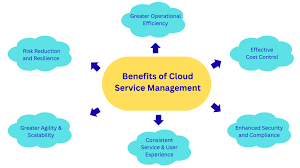
Cloud management has become a critical pillar of digital transformation for organizations seeking agility, scalability, and operational excellence. As enterprises increasingly migrate workloads to public, private, and hybrid cloud environments, the ability to centrally control, monitor, and optimize cloud resources determines long-term success. We focus on delivering a comprehensive, structured, and enterprise-ready approach to cloud management that aligns performance, security, and cost optimization under a unified operational strategy.
Cloud management is no longer limited to basic infrastructure oversight. It now encompasses governance, automation, compliance, cost intelligence, workload orchestration, and performance optimization across multi-cloud ecosystems. Organizations that master cloud management gain competitive advantages through faster innovation cycles, reduced operational risks, and predictable cloud spending.
Core Components of Cloud Management Architecture
Centralized Cloud Visibility and Control
Effective cloud management begins with centralized visibility across all cloud assets. We implement unified dashboards that aggregate real-time data from compute, storage, networking, and application layers. This holistic visibility enables teams to identify inefficiencies, detect anomalies, and ensure consistent operational standards across environments.
Centralized control reduces fragmentation, eliminates blind spots, and allows IT leaders to enforce policies consistently across providers such as AWS, Microsoft Azure, and Google Cloud Platform.
Automated Resource Provisioning and Orchestration
Automation is the backbone of scalable cloud management. Through infrastructure as code (IaC) and orchestration tools, we standardize provisioning workflows to ensure repeatability, reliability, and speed. Automated scaling ensures workloads dynamically adjust to demand, preventing overprovisioning while maintaining high availability.
By eliminating manual intervention, automation reduces configuration errors, accelerates deployments, and supports continuous integration and continuous delivery (CI/CD) pipelines.
Cloud Cost Management and Financial Governance
Cost Visibility and Spend Optimization
One of the most critical aspects of cloud management is cloud cost optimization. Without proper governance, cloud spending can spiral rapidly. We implement granular cost allocation models, tagging strategies, and usage analytics to track expenditures by department, project, or application.
Proactive cost controls such as budget alerts, usage thresholds, and reserved instance planning help organizations maximize return on investment while maintaining financial discipline.
FinOps Integration for Strategic Decision-Making
Cloud management integrates seamlessly with FinOps frameworks, aligning finance, engineering, and operations teams. This collaborative approach ensures cloud investments support business objectives while enabling real-time financial accountability.
Data-driven insights allow leadership to make informed decisions on workload placement, vendor selection, and long-term cloud strategy.
Security and Compliance in Cloud Management
Policy-Driven Security Enforcement
Security is foundational to cloud management. We enforce policy-driven security controls that define access permissions, encryption standards, and network segmentation. Role-based access control (RBAC) ensures only authorized users interact with sensitive resources.
Continuous monitoring and automated remediation help prevent misconfigurations that often lead to data breaches and compliance violations.
Regulatory Compliance and Risk Management
Cloud management platforms support compliance with industry standards such as ISO 27001, SOC 2, HIPAA, and GDPR. Automated compliance reporting, audit trails, and configuration baselines simplify regulatory adherence while reducing audit overhead.
Risk management frameworks embedded within cloud management tools identify vulnerabilities early, ensuring proactive mitigation before threats escalate.
Multi-Cloud and Hybrid Cloud Management
Unified Operations Across Multiple Providers
Modern enterprises rarely rely on a single cloud provider. Multi-cloud management enables organizations to distribute workloads strategically, avoiding vendor lock-in while optimizing performance and cost.
Unified management layers abstract provider-specific complexities, allowing teams to operate across environments with consistent tools, processes, and policies.
Hybrid Cloud Integration and Workload Portability
Hybrid cloud management bridges on-premises infrastructure with cloud platforms. Seamless integration ensures workloads move fluidly between environments based on performance, latency, or compliance requirements.
This flexibility supports legacy system modernization while maintaining business continuity and data sovereignty.
Performance Monitoring and Optimization
Real-Time Performance Analytics
Cloud management delivers real-time performance monitoring across applications and infrastructure. Metrics such as latency, throughput, and error rates provide actionable insights into system health.
Advanced analytics detect performance bottlenecks early, enabling rapid resolution and maintaining service-level agreements (SLAs).
Proactive Incident Management
Automated alerts and predictive analytics allow teams to address issues before they impact users. Integrated incident response workflows streamline troubleshooting, reduce downtime, and improve operational resilience.
Governance, Policies, and Standardization
Cloud Governance Frameworks
Strong governance ensures cloud environments remain compliant, secure, and cost-effective. We define standardized policies covering resource usage, security configurations, and lifecycle management.
Governance frameworks provide guardrails that empower innovation while preventing operational drift.
Lifecycle and Configuration Management
Cloud management oversees the entire lifecycle of resources, from provisioning to decommissioning. Automated lifecycle policies eliminate orphaned resources, reduce waste, and ensure environments remain clean and efficient.
Business Benefits of Advanced Cloud Management
Operational Agility and Scalability
Organizations leveraging advanced cloud management achieve rapid scalability without sacrificing control. New services deploy faster, infrastructure adapts instantly, and teams focus on innovation rather than maintenance.
Enhanced Reliability and Business Continuity
Redundancy, automated failover, and disaster recovery planning are integral to cloud management. These capabilities ensure uninterrupted operations, even during unexpected outages or demand spikes.
Strategic Alignment with Business Goals
Cloud management transforms IT from a support function into a strategic enabler. Data-driven insights align infrastructure decisions with business priorities, driving measurable outcomes and long-term growth.
Future Trends in Cloud Management
The evolution of cloud management continues with AI-driven automation, predictive cost modeling, and autonomous remediation. As environments grow more complex, intelligent cloud management platforms will become essential for sustaining efficiency, security, and innovation at scale.
Conclusion
Cloud management is the foundation of successful cloud adoption. By unifying visibility, automation, security, cost control, and governance, organizations gain full control over their digital infrastructure. A strategic cloud management approach enables scalable growth, operational excellence, and sustained competitive advantage in an increasingly cloud-first world.
If you want to read